Exploring Folk Horror


Folk Horror is one of the most underappreciated subgenres out there. It captivates for a variety of reasons. Not only due to its potential to actually scare you, but also because these are folklores that have been shared for thousands of years by diverse cultures. Many are quite disturbing, yet they all possess a certain magic. I must admit, if there are horror films that invade my dreams or nightmares, they are usually folk horror films. This is likely because they feel so realistic, as these stories were genuinely believed by many. In this blog, I will introduce you to some of my favorite folk horror films and explain why you should watch them. I will also delve deeper into the genre, so you'll know what to expect when watching one.
The VVitch

Released in: 2015
Directed by: Robert Eggers
Runtime: 92 mins
"The VVitch (Witch)" exemplifies what an outstanding folk horror film should be. Set in 1630s New England, it unfolds as a New England folktale. The story follows a family expelled from a Puritan settlement due to a religious disagreement. They relocate to a vast, isolated forest to establish a new farm. Eventually, one of the children is abducted and killed, by a witch, with the body used to create a flying ointment. The folklore in this film underscores the era's fears: witches kidnapping children, satanic pacts, and witchcraft. Directed by Robert Eggers, who I consider a master of modern horror, the film is crafted with an incredible atmosphere. While the film itself isn't overtly spooky, its lore and ambiance make it truly frightening. The feeling of a malevolent witch lurking in the woods generates significant tension, and the film is filled with unexpected twists.
Its all about the atmosphere
What makes Folk Horror an appealing subgenre is primarily the atmosphere each film creates. These stories allow you to experience them so deeply that you might even start to believe them. With today's knowledge and technology, folklore is rarely believed anymore due to the lack of "proof." While this is understandable, pretending to believe these tales while watching can enhance the experience, immersing you in the film and allowing you to feel the terrifying situations the characters endure.
Gokseong (The Wailing)

Released in: 2016
Directed by: Na Hong-Jin
Runtime: 156 mins
"Gokseong," also known as "The Wailing," is a Korean folk horror film set in a small village in South Korea. The story follows a police officer as he investigates bizarre murders linked to a mysterious disease. Rumors suggest that a mysterious Japanese man is behind the disease, believed by the villagers to be an evil spirit. As the officer, Joon-Goo, follows intriguing leads, the situation worsens when the disease affects his own daughter. The film's folklore is extensive, not adhering to a single belief. The villagers think that the illness or curse cannot be resolved through law enforcement, but rather through shamans, exorcism, and ancient superstitions. The rugged landscape of Gokseong symbolizes a "thin place" where the line between the human and spirit worlds is blurred. The film employs elements like rain, mud, and dense forests to convey nature's indifference—or even hostility—toward human suffering. The curse is attributed to an outsider (the Japanese man), and the presence of a stranger in the village fuels a supernatural nightmare. The atmosphere of this film is surreal, and it's a must-watch on a rainy day. The twists in this film will make you go crazy, so definitely give it a shot.
The Wicker Man

Released in: 1973
Directed by: Robin Hardy
Runtime: 93 mins
It's most lickely that whenever the word folk horror pops up the first film you think of is the wicker man. This film is the definition of folk horror. The film follows Sergeant Howie, a devoutly Christian police officer who travels to the isolated Scottish island of Summerisle to investigate the disappearance of a young girl. Upon arrival, he is horrified to find the islanders have abandoned Christianity for ancient Celtic paganism, led by the charismatic Lord Summerisle.
As Howie searches for the girl, he becomes trapped in a labyrinth of strange rituals, public nudity, and sexual games that mock his rigid faith. He eventually discovers that the girl's "disappearance" was a lure: the island's crops have failed, and the pagans believe only a very specific kind of human sacrifice—a man representing the Law, who comes of his own free will—can appease their gods. The folklore of The Wicker Man centers on a radical return to Celtic paganism, where the islanders worship the Sun and the Orchard as literal gods. They believe in transmigration, viewing death not as an end but as a transformation into other living things, which removes the moral weight of killing. Most crucially, they believe in a blood-debt to nature: if the harvest fails, the gods must be appeased through the "right" human sacrifice—an innocent, law-abiding outsider who comes to the island of his own free will and holds the power of the King. To them, the sacrifice isn't a murder, but a necessary, joyful ritual to ensure the island’s survival.
The modern "Upgrade"
If you're not into "older" films, but still want to experience a similar experience to the wicker man Midsommar (directed by: Ari Aster) is on many aspects similar. Midsommar is rooted in Swedish and Norse folklore, where life is viewed as a rigid, seasonal cycle. The Hårga cult believes in radical communalism, using ancient Runes and "sacred" inbreeding to guide their laws. Their most terrifying beliefs include the Ättestupa—the ritual suicide of elders to maintain the cycle—and the use of sympathetic magic, where blood and sex are offered to the earth to ensure a good harvest. Like The Wicker Man, it culminates in a 9-man sacrifice during the Midsummer festival, intended to purge the community of "unclean" spirits and restore their bond with nature.
It's definitely not the same, but it shares a lot of similarities, as well as the atmosphere.
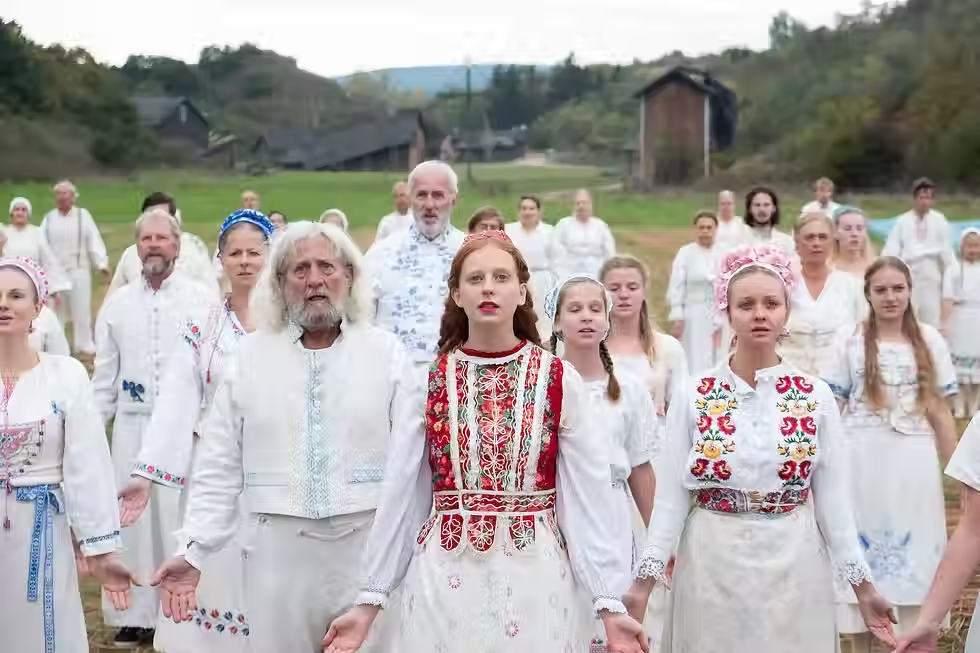
Midsommar (2019)
The Horror of "Polite" Evil
A distinctive theme that makes folk horror unique is that many films begin with the protagonist being warmly welcomed into a "polite" community. To the community, their beliefs are normal, and they are eager to share their culture (or you might be their sacrifice). This creates an unsettling atmosphere where it's difficult to discern whether the community is genuinely kind or simply "odd." As the guest, if anything goes wrong, you are the one held responsible. Not all folk horror involves a cult; some are set in local communities where the protagonist is greeted with open arms, thinking they are fortunate, only to eventually become a sacrifice or even food.
Kuroneko

Released in: 1968
Directed by: Kaneto Shindō
Runtime: 100 mins
"Kuroneko," also known as "Black Cat," is an ancient Japanese folk horror set during the Heian Period (around 995 AD). The story follows two women who were raped and murdered by a group of samurai. In the ashes of their house, a black cat appears and makes a "deal" with their souls. They transform into "ghosts" and must drink the blood of samurai to "return." After returning from war, Gintoki finds his home reduced to ashes and feels hopeless. As rumors spread through the town, the governor orders Gintoki to find and kill the evil spirits, leading him into a challenging situation. The folklore surrounding this film is extensive. In Japan, the word Onryō is very popular; it means vengeful spirit and is the main theme of this film. Bakeneko, meaning "monster cat," is also prominently featured, as the characters frequently hear a cat. Yurai vs Yokai refers to the human ghost versus the supernatural monster, with the two women (yurai) trapped in a yokai's body. Another folklore theme in this film is kagare. By becoming ghosts and drinking blood, the women embrace total impurity. The final theme is liminal space. The ghosts create a warm and cozy space between two worlds to lure in the samurai, which also establishes the perfect atmosphere for the film, making it one of the best folk horrors out there. This is also one of the most visually pleasing films i've ever seen.
In Conclusion
Folk Horror is one of my favorite subgenres because it is so distinct and creates a unique atmosphere. I hope that by reading this, you become more knowledgeable about the genre and feel inspired to explore it further. Share your favorite folk horror film in the comments, and it might feature in a possible part 2!


Comments